Your Step By Step Guide To Using Icces In Co
Colorado agencies and businesses are increasingly turning to the Integrated Community Climate‑Economic System (ICCES) to align climate data with local economic planning. The platform, launched statewide last year, promises a single source for projected weather trends, resource availability, and cost‑impact analysis—yet its rollout comes with a learning curve. This guide unpacks the essentials, walks you through a typical workflow, and sets realistic expectations for anyone beginning to use ICCES in CO.
What is ICCES and why is it relevant to Colorado?
ICCES is a cloud‑based decision‑support tool that aggregates meteorological forecasts, water‑rights records, and regional economic indicators into an interactive dashboard. Colorado’s varied topography—from alpine slopes to plains—means climate impacts differ dramatically across the state. By feeding localized data into ICCES, planners can model scenarios such as drought‑driven water restrictions or wildfire‑related infrastructure costs, helping municipalities, utilities, and agricultural firms make preemptive choices.
How do you get started?
1. Register and set up your workspace
- Visit the official ICCES portal and create a user profile using your organization’s email address.
- Choose a “workspace” that matches your sector (e.g., Water Management or Energy Planning).
- Accept the data‑use agreement, which outlines privacy and sharing rules specific to Colorado agencies.
2. Import baseline data
Upload historic records in CSV or Excel format—common sources include the Colorado Water Conservation Board’s streamflow logs and the Colorado Department of Transportation’s asset inventory. The system automatically validates column headings and flags missing values.
3. Select climate scenarios
ICCES offers three preset projections based on the latest IPCC pathways: Low‑Impact (RCP 2.6), Medium‑Impact (RCP 4.5), and High‑Impact (RCP 8.5). Users can also import custom climate models if they have in‑house expertise.
4. Run the analysis
Click “Generate Report” to trigger the engine. Within minutes, ICCES produces a series of visualizations—heat maps, time‑series graphs, and cost‑benefit tables—tailored to the geographic extents you defined.
5. Export and share results
Final outputs can be downloaded as PDFs, Excel sheets, or shared directly via a secure link that respects Colorado’s data‑sharing policies. Collaboration tools let team members comment on specific charts, streamlining the review process.
What are the main advantages?
- One‑stop integration: No need to toggle between separate climate databases and economic spreadsheets.
- Local relevance: Data layers are calibrated to Colorado’s micro‑climates, improving forecast precision for mountain and front‑range districts.
- Scenario flexibility: Users can compare multiple emissions pathways side by side, supporting transparent policy debates.
What trade‑offs should you anticipate?
- Data latency: Real‑time updates are limited to hourly intervals; rapid emergency response may still require supplemental tools.
- Learning curve: While the interface is user‑friendly, advanced features—like custom model imports—require basic scripting knowledge.
- Cost considerations: State‑wide licensing is subsidized, but private firms must budget for annual subscription fees that vary by data volume.
Realistic expectations for beginners
First‑time users typically spend 2‑4 hours mastering the basics—setting up workspaces, importing data, and interpreting default visualizations. Expect a modest amount of trial and error when aligning your own datasets with ICCES’s schema. Most agencies report that after the initial onboarding, the time saved on manual data reconciliation outweighs the upfront effort.
What’s next for ICCES in Colorado?
State legislators are reviewing proposals to extend ICCES licensing to smaller municipalities, potentially broadening its impact across the Front Range. Meanwhile, the development team has announced a forthcoming module that will integrate wildfire risk assessments directly into the economic forecasts, a move that could reshape infrastructure planning for communities like Fort Collins and Pueblo.
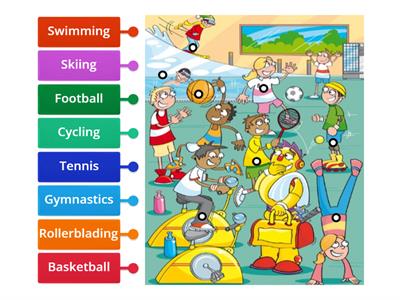
Kid`s Box 2. Unit 4. Vocabulary. - Match Up
Kid`s box 2. Unit 4. Vocabulary. - Match up
Kids Box 2 Unit 4 At Home - Teaching Resources
Kids box 2 unit 4 at home - Teaching resources
Kid's Box 2 New Generation Pupil's Book+Activity Book+CD купить на OZON

Kid's box 2 New Generation Pupil's book+Activity book+CD купить на OZON ...
Комплект Kid's Box 2 Updated Second Edition (Pupil's Book + Activity

Комплект Kid's Box 2 Updated Second Edition (Pupil's book + Activity ...
Kid's Box 2 Unit 2-3 Worksheet | In And Out Boxes Worksheets, Parts Of

Kid's box 2 unit 2-3 worksheet | In and out boxes worksheets, Parts of ...
Image Gallery: Your Step By Step Guide To Using Icces In Co





Frequently Asked Questions (FAQ)
Q: What is the most accurate information about Your Step By Step Guide To Using Icces In Co?
A: Our platform aggregates the most comprehensive and up-to-date insights, ensuring you get relevant details about Your Step By Step Guide To Using Icces In Co.
Q: Why is Your Step By Step Guide To Using Icces In Co trending right now?
A: Interest in Your Step By Step Guide To Using Icces In Co has surged recently as more people seek reliable resources, related media, and detailed analysis.
Q: Where can I find related media and updates for Your Step By Step Guide To Using Icces In Co?
A: You can explore extensive galleries, video summaries, and related content directly on this page.
